Muna Wants YOU To Dance On The Wall
Frenetic beats, heart-gripping lyricism, and euphoric instrumentals: MUNA’s fourth studio album, Dancing on the Wall, is a sign of the times.
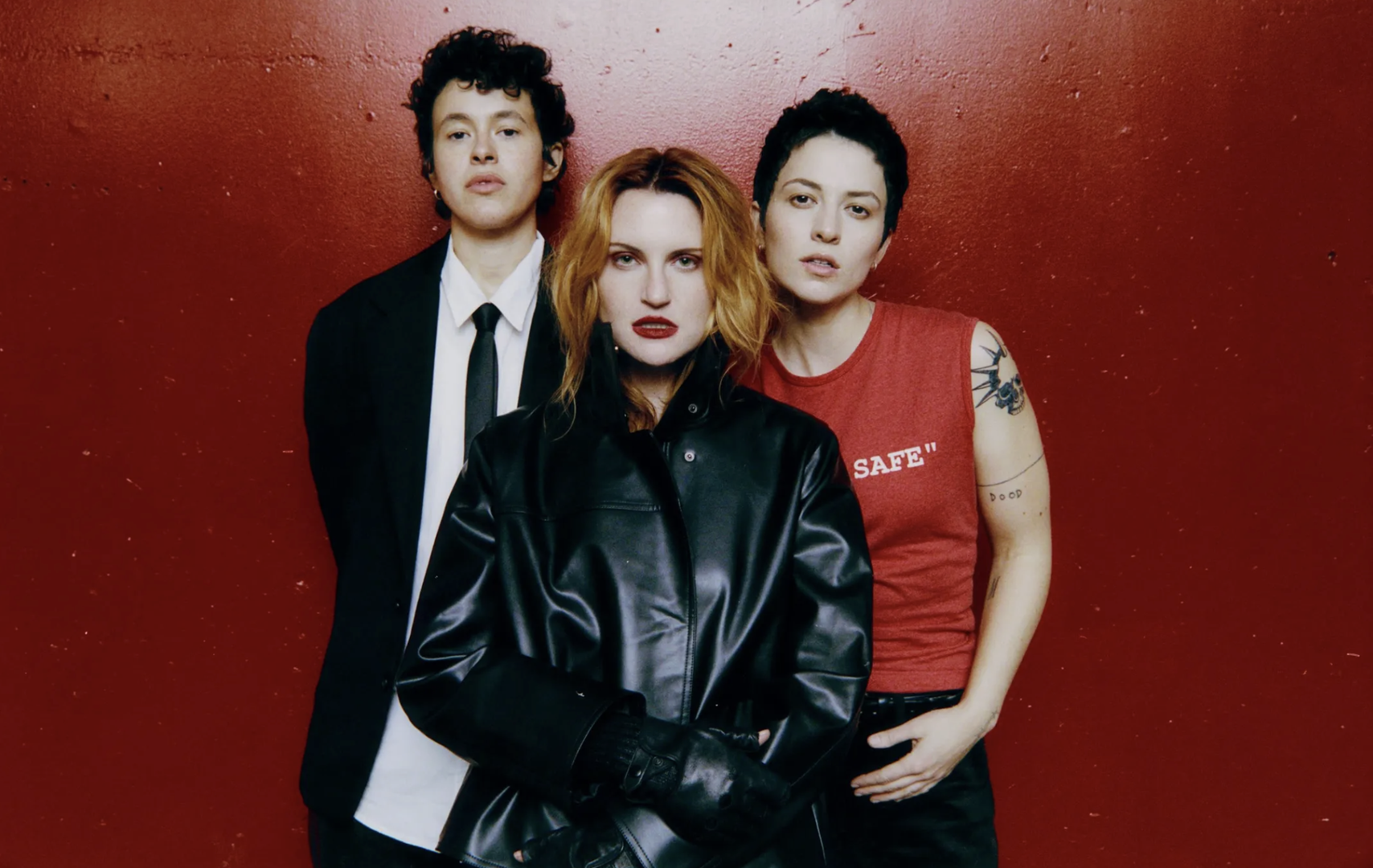
Since forming at USC in 2013, MUNA’s catalog has ceaselessly explored the complexities of queerness, love, and loss, creating a distinct sense of solace within their listeners. The community surrounding MUNA’s discography is uniquely personal: their songs are a catalyst for self-discovery and an uninhibited expression of queer joy. The release of Dancing on the Wall has only expanded this musical sanctuary.
Produced by band member Naomi McPherson, Dancing on the Wall is the result of the band’s highly refined musical synergy amalgamating in an exuberant, intimate, and restless sonic journey. With dance, synth-pop, and post-punk influences, the precise electronic sounds of the first track, “It Gets So Hot,” mimic a machine powering up, setting the tone for the tracks that follow.
While the exhilarating beats beg listeners to dance, the album’s spectacle lies not only in its sound, but in its lyrical depth. MUNA has never been so gutsy, honest, and sharp. On the closing track, “Buzzkiller,” songwriter and lead singer Katie Gavin sings, “I made it to the protest, the speech made me cry/ But then I came home, and I still feel hopeless.” The band laces the album with poignant social commentary and speaks to the widely experienced duality between the despair and rage of existing in the empirical core of the global West amidst government-funded genocide abroad.
The song “Big Stick” references state-controlled media, “And I control the airwaves, I control the news/So I can make you want anything that I want you to.” Later in the track, Gavin sings, “We give weapons to dictators in apartheid states.” In Dancing on the Wall, MUNA is wholly unafraid of the truth, proving that emotionally impactful music begs to address the social conditions that preceded its creation.
The band’s stellar ability to explore the complexities of contemporary life while using production elements that demand a physical response enhances the album’s resonance, creating a work that stands alone in the oversaturated, often superficial pop genre. Thematically, the intensity of the lyrics is thoughtfully blended with the melodic force of synths and guitars, and the confrontational pulses. Dancing on the Wall sees MUNA in a new form: still shining, but with sweat instead of glitter, and more reflective than ever before. Their fourth studio album is a mosaic of the modern American social fabric: heartbreak, ecstasy, injustice, and radical expression in the face of colossal systemic cruelty.
Responding to an increasingly conservative political agenda threatening to obliterate the mere existence of queerness, Dancing on the Wall provides a fierce celebration of queer expression, demonstrating the power of music as a form of resistance. The album calls upon listeners to harness their personal agency, asserting that liberation can be self-imposed. Although the closing track is called “Buzzkiller,” Dancing on the Wall is evidence that no one can kill the human buzz that drums within us.