
Revisiting Soul Punk: the Forgotten Solo Album from Fall Out Boy Vocalist Patrick Stump
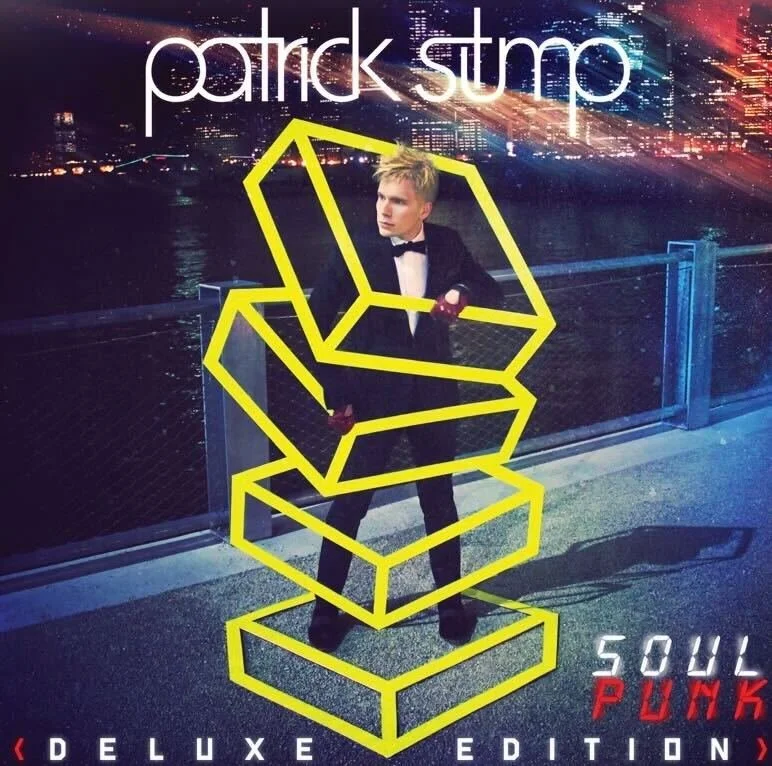
Patrick Stump’s solo career is often overshadowed by the popularity of Fall Out Boy. Soul Punk, the first of two albums from Patrick Stump’s solo career, is a timeless critique of both the alternative scene and the politics of the 2010s that reverberates even now 15 years later. Released after Fall Out Boy’s hiatus started in 2009, Soul Punk comprises 11 tracks that blend Stump’s crisp R&B voice with the complex lyrics perfect for the punk genre.
“Explode” is the opener to the album and really sets the tone for the rest of the era, giving a fast beat in contrast to Patrick’s lower register. The song itself tells of the amount of stress that can build up before someone breaks. My favorite lyric is actually from the chorus:
“If I’m never your hero, I can never let you down” (1:06)
Not only is this a great opener, but it also makes for an incredibly vulnerable track as Stump speaks directly to his audience and compares his life in the spotlight to a high-stress work environment in the verses.
Second on the tracklist is “This City,” one of Stump’s many tributes to the city of Chicago, which comes across through the sheer passion of his vocals. Lupe Fiasco’s featured verse on this song fits so well, too. Overall, it’s a fun bop that feels like a stepping stone to Fall Out Boy’s later tributes to Chicago.
“Dance Miserable” is set up as a club banger akin to those of the late 90s and early 2000s. Lyrically, it holds the same weight as the recently popularized “Dancing Through Life” from the Wicked soundtrack. Again, I can’t stress this enough. I love Patrick Stump’s lower register, and he utilizes it so much in this record—especially this track. It’s one of those songs that would’ve gotten you bullied in middle school, but that just means it still holds up.
“Spotlight (New Regrets)” is one of my favorite songs from Stump’s solo career. The song defined my middle school years (I wish I could say that in a non-cringy way, but it’s true). Now, six years later, it means something entirely different to me as I understand how the fame that Fall Out Boy was catapulted into deeply affected the members of the band. It’s one of those messages that you recognize early on, but that evolves in meaning as you grow older. The song itself means something entirely different to me now than it did when I first heard it. This is “‘Cause compassion is something that they just don’t teach” (2:44).
“The ‘I’ in Lie” is a lovely depiction of the temptation some people have to cheat on their partners. While I don’t condone cheating and I fully believe in solid two-way communication, I think the pure honesty in this track is what makes it so good. Not only is the chorus catchy with his “If you're unfaithful, put your hands in the air/Hands in the air, hands in the air,” he also blames both people engaging in the affair. Usually, songs engaging with this concept blame one partner, but this subversion adds complexity to an already good song. It’s more about recognizing one’s faults than it is about placing the blame.
“Run Dry (X Heart X Fingers)” is a hear me out if I’ve ever heard one. If you ignore the minute-long cricket sounds at the end, it’s a great song. Patrick’s take on sobriety and alcoholism in this track is a reminder of the cycle you can find yourself in when trying to improve. Though it’s mainly about alcoholism, it certainly applies to other types of addiction. Stump does an incredible job of balancing the heavy topics in his songs with fun and upbeat instrumentals and catchy vocals. Also, the reason it’s 8 minutes long is that “Cryptozoology” is a hidden track, but I’ve always thought of them as the same song.
“Greed,” I feel, embodies Patrick Stump’s early vocal days of under-enunciation, but I still love it. This song itself is a critique of the state of the world as of 2010-2011—calling out white-collar workers—and I think this is something that would resonate with my fellow Emersonians just in lyricism:
“Consumption is consuming me/The laissez hasn’t been fair to me/A party for the sea is like a funeral for the beach.” (0:08)
Though the next track, “Everybody Wants Somebody,” is almost 14 years old, it still resonates with the current dating scene. It’s near-impossible to find that “special someone” because not only do people want different things, but there are also so many aspects of dating culture that put a ton of pressure on young adults. So, because the Boston dating scene scares me, I’ll happily take this song as well as my AO3 reading time over participating. Shout out to everyone making it work right now. Y’all are brave.
“Allie” is a heartbreaking track. This was one of those songs that I had zero business listening to in middle school, the true meaning hitting me like a truck at fourteen. “Allie” talks about the singer’s “first time” and how he was coerced into it, while also implying that he wants to try again with the subject of the song. The guitar is chilling, and the vocals are heavenly, but I will advise a content warning for sexual assault. It’s absolutely not something to show your kids. I found this song on my own through my love of Fall Out Boy, and my parents never put two and two together, but it definitely threw me into a loop when I realized what Stump was talking about.
“Coast (It’s Gonna Get Better)” is hopecore before hopecore existed. It represents that “it’ll pass” mantra your parents drilled into you as a teenager, that you shrugged off, but was admittedly true. The song recently reentered my rotation as a reminder that the world keeps spinning. This is not me saying this is one of those “it could be worse” because this song chants the opposite. A majority of the song is Stump singing that “it’s gonna get better.”
“Bad Side of 25” is probably my favorite track on this album—mainly because some of the things he lists about getting old were things I could recognize at 13 that my peers couldn’t. That’s not the only reason, though. I love the rhythm, and the chorus scratches the back of my brain every listen. Though I’m arguably still on the “good” side of 25 (if there even is one—my peers seem to always be in hell), it’s never failed to raise my mood. This song took me forever to learn the lyrics to, and it’s the only song I’ve retained all the lyrics to.
“People Never Done A Good Thing” epitomizes early emo, even though it doesn’t try to. Stump’s commentary on the Western world is spot on, focusing on separating the masses from the individual and the sins committed by humanity. It’s a great pairing with “Greed,” and if you’re looking for that straight-up punk message, these two tracks are perfect for you—even if the musicality isn’t fitting to the traditional “punk” genre conventions.
“When I Made You Cry” has backing instrumentals in the intro reminiscent of the Wii Resort Sports theme, but that’s a good thing, I promise. Stump pairs beautiful lyrics with a fast beat to give us a ballad that feels like a hidden gem. My favorite verse comes with the second pre-chorus:
“A crystal tells the future, it’s a diamond makes it so/Sea is rough but you can’t mute her so you let your lumber go/And I've labored all this paper as a way to let you know/That I’m sorry if I ever made you cry” (1:27).
The song’s message of commitment, contrasted with the “when I made you cry” chorus, makes for an interesting picture.
“Mad At Nothing” is a great song with conflicting lyrics. The verses and chorus don’t match up, presenting two different perspectives. The verses present the singer as someone willing to endure their partner’s anger if it means they’ll be okay. The chorus, however, dismisses the other’s anger and then proposes that they should have picked the singer. The tension in the song gives off a platonic “Heartbreak Girl” vibe—a “I would be a better friend ‘cause I wouldn’t upset you like that” type of thing.
As our feeds become more and more dominated with horror stories and depressing news, I invite everyone to give this album a listen — whether you’re hearing it for the first time or revisiting it. Stump’s messaging, though over a decade old, serves as a mantra through 2026. The album itself is timeless, and there’s nothing I wouldn’t give to be 20 in 2011 to be able to see this era live. This whole album is what I wanted club music to be when I was 13.